
This post is part of the GNHRE Blog Symposium, The Unmaking of the European Green Deal.
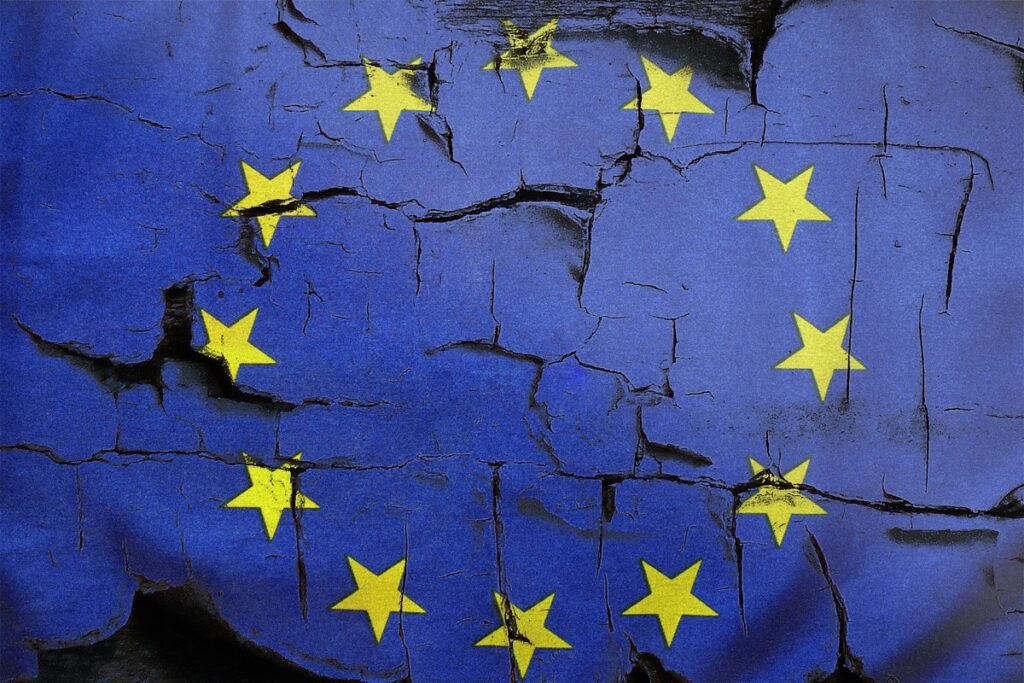
Picture https://pxhere.com/en/photo/1209303
CC0 Public Domain
When the first von der Leyen Commission unveiled the European Green Deal in December 2019, it was framed and seen as a defining project for the EU. It combined the EU’s climate ambitions, against the backdrop of the Paris Agreement which had come into force three years earlier, with a broader vision of economic transformation. The political context in which that vision was articulated has since changed considerably. As this symposium explains, the quick shift in the political winds in Europe led to the weakening of long-awaited proposals for new pieces of legislation, relaxation of rules already in force or postponement of the application of others. By 2026, few elements of the European Green Deal have been left untouched by the Omnibus simplification agenda.
Other blog entries in this symposium map the unmaking of the European Green Deal and demonstrate how the separate instances of deregulation are not just “isolated technical amendments to individual legislative instruments”, as the symposium introduction puts it, but cumulatively form a pattern. This piece looks at the consequences of such unmaking in the area of EU external relations, its bilateral trade relations specifically.
In recent years, as the efforts to embed sustainability into the multilateral trading system stagnated, major trading powers have taken matters into their own hands, increasingly including commitments on so-called non-trade-related values, such as environmental protection and labour standards, in their free trade agreements. While not alone, the EU has been arguably leading in this endeavour. Human rights clauses have long been an ‘essential element’ in the EU’s trade and association agreements. In addition, and more recently, the EU has included Trade and Sustainable Development (TSD) chapters in all its new generation Free Trade Agreements (FTAs) since the EU-South Korea FTA of 2011, without exception, and with an ever-widening scope, bringing obligations regarding labour and environmental protection. While the focus is on sustainable development, these chapters have close links to human rights. The human rights status of ILO fundamental principles and rights at work has been accepted in the doctrine; a similar status can now also be claimed for the environmental clauses, following the 2022 UN General Assembly resolution recognising the human right to a clean, healthy and sustainable environment.
Among others, two articles of the TSD chapters establish obligations concerning the parties’ domestic laws on labour and the environment, with some variation across the different FTAs. Firstly, via different formulations of varying levels of bindingness and enforceability across different FTAs, the so-called Right to regulate and levels of protection articles establish obligations to ensure consistency with international standards, to strive to improve the levels of protection, and to aim for high levels of protection. Consistency with international norms acts as a limitation to the parties’ right to regulate, affirmed in the beginning of these articles.
Secondly, Upholding levels of protection articles, whether regulated in a separate paragraph or together with the Right to regulate article, consistently bring obligations of effective enforcement and non-regression and sometimes also refraining from waiving or derogating from domestic law, exemplifying some of the clearest and most binding language in the otherwise criticised TSD chapters. Accordingly, the FTA parties, in differing combinations across agreements, shall not:
1) fail to effectively enforce their domestic law in the covered areas through a sustained or recurring course of action or inaction
2) weaken the levels of protection afforded in their domestic law in the covered areas
3) waive or derogate from their domestic law in the covered areas.
A complementary relationship exists between the last two obligations, as ‘waiving or otherwise derogating from domestic law’ addresses the changes to the domestic law as it is now while ‘weakening the levels of protection’ addresses changes to the domestic law and as such the domestic law in the future.
In all of the FTAs, a linkage with trade and/or investment is required to trigger Upholding levels of protection articles. While the phrase “as an encouragement” emphasises the intent of the parties, the phrase “in a manner affecting” can be seen as requiring a showing of actual effect. Brussels consistently justifies the simplification reform with the same argument: boosting European competitiveness. The legislative delays and scope reductions are not presented as isolated technical adjustments but as necessary responses to industry and state concerns about the impact of environmental regulation on trade flows and investment attractiveness. Based on the Draghi Report, the Commission frames the Competitiveness Compass in terms of the EU’s need to “create a favourable business environment” and to “unlock investments ”. For example, the changes to CBAM are justified by the need to make it easier for SMEs to participate in global trade. In doing so, the Commission arguably provides evidence that could help satisfy the evidentiary requirement for establishing the EU’s own violations.
These two articles complement each other and provide a comprehensive framework that addresses both the content and the enforcement of domestic law regarding labour and environmental protection. While the Right to regulate and levels of protection article focuses on domestic laws aligning with international standards and striving for a high level of protection, the Upholding levels of protection article ensures that these standards are not only on paper but are effectively enforced and that they are not diluted over time.
An example illustrates the point. As explained above, under the non-regression obligation the parties commit not to weaken the levels of protection afforded by their domestic law. In other words, changes must maintain or improve standards: the non-regression clause prevents backsliding below established levels. Take the changes made to the EUDR since its adoption in 2023. Regulation (EU) 2025/2650 relieved downstream operators and traders of most of their own due diligence obligations, and Commission Delegated Regulation (EU) 2026/2102 removed products such as cattle hides, skins and leather from its scope. Coupled with an application date that has been postponed twice already, these much-criticised changes weakened the level of protection compared with the original version and, provided the required link with trade or investment can be shown, arguably amount to a breach of the non-regression obligation.
Pinpointing how and which one(s) of these obligations the Omnibus changes to each piece of legislation breach requires a lengthy explanation, beyond what any blog post can and should offer. I have analysed at length elsewhere the violations of each of these obligations that the systemic unmaking of the European Green Deal constitutes. What this blog post focuses on is the impact of this unmaking on the EU’s external relations.
There are two main consequences. One is legal. The forgotten side of the TSD chapters, which are almost exclusively discussed in the EU in the context of breaches by trading partners, is that the EU is just as bound by the obligations it proposes in negotiations. A trading partner can drag the EU before a Panel of Experts (PoE) and bring the claim that the EU is breaching its obligations regarding the domestic law in the TSD chapters. These panels are foreseen for the resolution of disputes arising from the TSD chapters. Under older treaties, carving out the TSD disputes from the general dispute settlement chapters of the FTAs, these panels could only issue non-binding recommendations with no compliance mechanism to follow up. It is important to note that South Korea has implemented most of the recommendations given in the report of the Panel of Experts in the EU-South Korea labour dispute, the only example of the TSD dispute settlement system being triggered so far, despite lack of sanctions for non-compliance.
Following the Commission’s 2022 Communication, announcing a more assertive approach to TSD enforcement, this situation has changed under the most recent FTAs, starting with the EU-New Zealand FTA (signed in 2023, in force since 1 May 2024). Firstly, TSD disputes are now covered by the general dispute settlement mechanism of the FTA. Secondly, for the first time, trade sanctions, i.e. the suspension of concessions, are available as a last resort for serious violations of the ILO fundamental principles and rights at work and of the Paris Agreement, which is increasingly included as an essential element of EU FTAs. The same model is followed in the EU–Chile Interim Trade Agreement and the EU–Kenya Economic Partnership Agreement.
It is worth noting that the FTAs that preceded the Court’s ruling on the EU-Singapore FTA of 2019 were concluded as mixed agreements, with the trading partner on one side and the EU and its Member States on the other. Following Opinion 2/15 of the Court of Justice of the European Union (2017), FTAs, starting with the EU–Japan EPA and the EU–Singapore FTA (both in force in 2019), have been concluded by the EU alone on the basis of its exclusive competence over the common commercial policy. In the case of mixed agreements, to which the Member States are parties alongside the EU, questions also arise as to the compliance of individual Member States and the allocation of responsibility between the EU and its Member States. In Opinion 2/15, the Court also stressed the essential character of the TSD commitments, noting that a breach would entitle the other party to terminate or suspend the liberalisation of trade under the agreement, in accordance with the rule of customary international law codified in Article 60 of the Vienna Convention on the Law of Treaties.
That said, it is worth considering how likely this consequence is to materialise in practice. That there has been only a single instance of TSD enforcement in the decade and a half of their existence shows the general reluctance of FTA parties to take action against potential TSD breaches. It took years of calls from stakeholders, including the European Parliament, before the Commission took action, and only against South Korea. The political capital it requires to bring a trading partner in front of a Panel of Experts, however soft the mechanism might be, seems too high. FTA parties also have little incentive to go after one another, since TSD obligations are a two-way street and a complaint may invite a counter-claim. Moreover, the trade/investment linkage was interpreted strictly by the panel in the first labour dispute to reach a panel under a US trade agreement, the US-Guatemala labour dispute under CAFTA-DR (2017). While the ad hoc TSD PoEs are not bound by precedent, it is not certain that an alleged breach can be established, even if there is political will to pursue it.
In light of this, the other consequence of the unmaking of the European Green Deal may carry even greater weight: reputational damage. For decades, the EU has presented itself, or has been seen, as the shining example of a sustainable global economy, the normative power that pulls others toward higher standards, in part through its FTAs. This has been called the EU using its ‘normative power’; ‘exporting its norms’; being a ‘global actor’ or exercising the ‘Brussels effect’. That position rests on coherence between what the EU asks of others and what it lives up to within its own borders.
The EU should not forget the bilateral promises it has made to its trading partners. If the EU is now seen as retreating from those values when it becomes politically or economically inconvenient, it risks being labelled hypocritical. Such a perception would not only erode the EU’s soft power and diplomatic capital but also undermine the credibility of its ongoing and future negotiations with third countries.
The structural unmaking of the European Green Deal raises questions not only about environmental protection within the EU but also, as the symposium introduction puts it, about the “Union’s compliance with its own international obligations”.
The systematic regression of EU environmental law, through narrowed scope and the postponed application of many Green Deal instruments, firstly exposes the EU to the risk of being brought before a Panel of Experts for possible breaches of its obligations regarding domestic law under the TSD chapters of its FTAs. Arguably even more crucially, it jeopardises the EU’s credibility as a global sustainability leader. The credibility the EU has built over decades as a pioneer in promoting sustainability inside and outside of its borders enabled the EU to encourage partner countries to adopt higher sustainability standards. As soon as trading partners see that the EU, the guiding force, takes the easy way out when the going gets tough, that credibility evaporates, and with it the level playing field that the TSD chapters help to secure and the very competitiveness that simplification supposedly aims to promote. Above all, it would come at the cost of protection for ecosystems, workers and communities in partner countries, whose rights the TSD chapters are meant to safeguard.